
Moving to Florida with a leased car: how to register it
Open a relocation case with the leasing company, then ask your Florida tax collector where it should send the title and what authorization the office needs. Bring the lease agreement, current out-of-state registration, Florida insurance, identification and VIN verification. If the lessor will retain the title or the documents are still on the way, ask the office which registration option it can review.
Prepare your leased-car documents and county visit
Start with the names on your lease and registration
Pull out the signed agreement for the car you plan to bring to Florida. Look for the lessor, the person or company that leases the vehicle to you, and the lessee, the person named as the customer. Compare those names with the current registration. A dealer may have arranged the lease and a servicing company may collect payment under its own name. The title might name a different entity in the same group as the legal owner. Use the name and contact details that the leasing company’s title team confirms when you speak with the county.
A Florida registration can be in your name while the company still owns the car. Florida Statutes § 320.0601(4) addresses registration in the lessee’s name and address for a long-term leased motor vehicle. FLHSMV’s RS-53 procedure explains how the agency records the owner and registrant for eligible vehicle classes. This distinction helps when a bank, dealer or insurer asks for the owner. For example, updating the account address could put your correct apartment on your bill while the title still shows the lessor in your previous state. Keep a note of each party’s role, the issuing state and when your registration expires before starting the relocation request.
| Record | Check this before calling | Who can confirm it |
|---|---|---|
| Lease agreement | Lessor, lessee, VIN and relocation provisions | Leasing company |
| Current registration | Issuing state, expiration date, plate and VIN | Issuing motor vehicle agency |
| Title record | Owner name, format and any separate lien | Lessor or agency holding the record |
| Insurance card | Vehicle, effective date and policy state | Insurance carrier |
Open a relocation request with the lessor
Contact the leasing company through the channel listed on your agreement or authenticated account. Ask for the team that handles vehicles moving to another state. Give it your move date, destination county and the VIN through its secure channel. Ask whether it requires permission to relocate or transport the car and what the agreement says if you plan to return it in Florida. The team that updates your billing address may be able to route the request to its title office. Ask for a case number and who will be responsible for sending any papers.
Use the first call to learn which state issued the title, whether the title is paper or electronic, and whether the lessor intends to transfer it to Florida. If it will transfer, find out what it can send and whether it needs the county’s request letter. If it intends to retain the out-of-state title, ask what paperwork it can provide showing that position and authorizing Florida registration. Ask whether another company holds a lien on the vehicle and who will get a statement from that company if the county requires one. Avoid taking an internal note that says your address has been updated as confirmation that the lessor has handled the title or authorized you to sign.
- Save the case number, title department contact, date of the request and expected next update.
- Ask whether the lessor will file anything itself or provide authority for you to handle it.
- Check where the lessor wants copies of the new registration and any plate receipts.
- Ask for written instructions if your lease is close to maturity or you are considering a buyout.
Ask your county which paperwork it accepts
Explain that you are moving with the car on the same personal lease and that a company owns it. Tell the county whether the company plans to transfer the title, says it will keep the out-of-state title, or has not confirmed either. Ask how it wants the case routed and whether it needs a signed authorization, power of attorney or title application. The type of signature required depends on what the applicant is doing on the company’s behalf. If the office asks for original signatures or a specific form, get its instructions before the lessor creates the packet.
Lee County publishes a request letter for cases where the lessor or lienholder holds the title. Its standard title route tells customers to wait for the office’s letter once the original arrives. Orange County asks leased-vehicle applicants for a lease copy and the relevant company and account details. Manatee County provides a separate registration-only checklist and asks customers to prepare its VIN form in advance. Use the directions for the office where you will actually apply. Ask where the ownership documents should be sent, whether they can match them to your appointment and how you can check receipt. Give the lessor those instructions so it does not send an original to an unrelated office or use your home address when direct delivery is required.

Distinguish a title transfer from a registration-only case
If the lessor will provide the necessary title material, ask the county whether it can title and register the car at one visit. Confirm the lessor’s exact name and whether the packet must include proof that someone can sign for it. Changing the state that holds the title can leave the same legal owner on the record. When the packet has been sent but has not arrived, FLHSMV’s notice INFO23-026 describes a Documents Pending reason for certain new-resident registrations involving an out-of-state lessor. Let the office determine what can be issued while waiting and who must follow through on the Florida title.
RS-04 separately lays out evidence for an eligible registration-only transaction involving an out-of-state lessor that wants to keep the title in the other state. Its documentation section calls for a company letter identifying the car and the lessor’s position on Florida titling. The letter should authorize the lessee to register in Florida. If that authorization is missing from the letter, RS-04 calls for a copy of the lease. Verify what the office needs for proof of title. The procedure lists a copy of the out-of-state title showing the lessor, a letter stating that the title is electronic, or a copy of the official title application receipt if the title has not yet been issued. A separate active lien may require a separate lienholder letter and authorization.
The state notice and procedure use administrative reason codes for different circumstances. Ask the office what it actually recorded when it reviews your case. The deciding facts are whether the original title is on its way, whether the lessor intends to retain it and what evidence the office has accepted. If only registration was issued, ask whether Florida title work is pending and record which person or company is expected to act next.
| What the lessor says | Next question for the county |
|---|---|
| We can send the title to Florida | Where should it go and how will you confirm it arrived? |
| The title is on the way | Can you review this for registration with documents pending? |
| We intend to keep the out-of-state title | Which RS-04 evidence and authorizations will you need? |
| The title is held with a separate lender | Does that lienholder also need to send a statement or authorization? |
Coordinate insurance and transport with the move date
Ask your insurer how to put valid Florida coverage in force for the leased vehicle and what documentation it will provide. Give it the address where the car will be kept and the actual VIN. Share any lease requirements the insurer needs to see, such as a specified deductible or the way the leasing company should appear on the policy. Before the appointment, confirm that the coverage is in force for the date of registration and that the Florida proof shows the correct vehicle. If the insurance record requires a correction, get the insurer to update it and issue a new card.
Plan how the car gets to Florida and where it will be available for verification. A Florida appointment does not extend an existing registration. If the old plate is about to expire, ask the agency that issued it whether you have a valid way to drive to the new state and ask your lessor about any restrictions on transport. If you have booked a carrier, confirm who can release and receive the vehicle and how you will reach it after delivery. Keep a copy of the delivery paperwork and choose an inspection time based on when you can physically show the car. Check the previous state’s plate and coverage requirements before cancelling any policy tied to a registration that remains active.
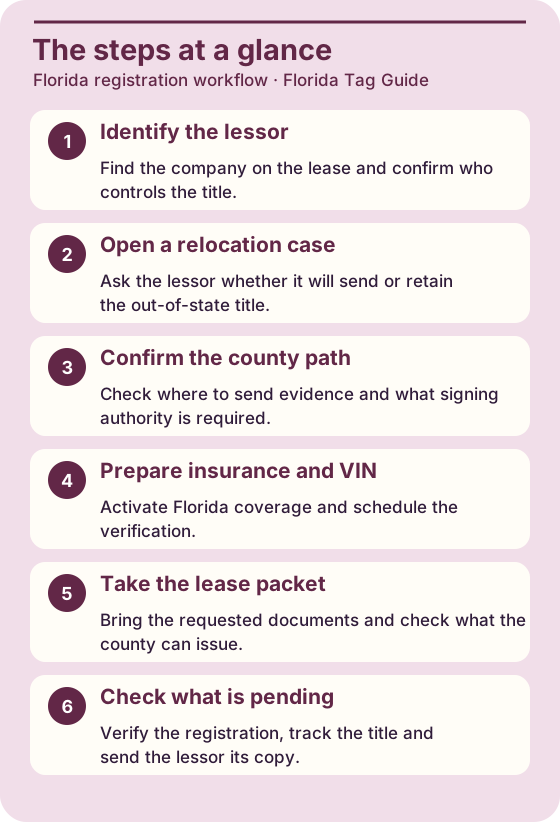
Read the steps as text
- Identify the lessor Find the company on the lease and confirm who controls the title.
- Open a relocation case Ask the lessor whether it will send or retain the out-of-state title.
- Confirm the county path Check where to send evidence and what signing authority is required.
- Prepare insurance and VIN Activate Florida coverage and schedule the verification.
- Take the lease packet Bring the requested documents and check what the county can issue.
- Check what is pending Verify the registration, track the title and send the lessor its copy.
Arrange the VIN verification and build your appointment folder
Ask the county whether the chosen service center can verify the VIN on site or whether you should arrive with Form HSMV 82042 already completed. RS-04 specifically addresses that form for a registration-only case when an out-of-state lessor holds the title. The instructions assign parts of it to the applicant and to the appropriate verifier. If you want to have the car verified before or after a shipping handoff, ask the county whether it accepts the verifier you can use and how it wants the completed form presented. A vehicle photo can help you double-check the characters. Arrange the official verification separately.
Place the current out-of-state registration, signed lease agreement, identification and Florida insurance proof together. Add the verification form if you arranged an inspection separately and any letter, title evidence or signing authority the county specifically asked you to bring. Make a note in the folder if the lessor has sent an original directly. Include the tracking number or agency reference when available, so the clerk can look for it. If the current registration is missing or expired, tell the office before the appointment. Manatee County, for example, describes an official letter from the state where the vehicle is titled for that situation. Ask whether and how your own county can accept substitute evidence.
- Signed lease and current vehicle registration, with the same VIN on both.
- Identification for each required applicant or representative.
- Current Florida insurance evidence for the leased vehicle.
- Completed VIN form or a confirmed arrangement to present the car.
- Lessor’s letter, signing authority or delivery reference, as the office directs.
- Any lease statement or evidence of earlier tax that the office or lessor specifically requests.
Separate the counter charges from the monthly lease bill
Ask the tax collector for the amount you should expect to pay at the appointment once it knows the transaction type. Registration charges depend on the class and the office handling the application. The bill could include a plate, service fees and a title charge if the office processes a Florida title. If you have an eligible Florida plate or fee history, tell the county and let it review whether that affects the charge. The lessor may already cover some items or bill them separately under your agreement. Ask who pays each line and whether the lessor needs a receipt for its records.
Ask the leasing company’s billing team what, if anything, changes on the monthly statement after the car is registered in Florida. Florida Statutes § 212.05(1)(c)2 generally addresses sales tax on payments for motor vehicle leases of at least 12 months when the vehicle is registered in Florida, subject to the provisions and exceptions in that section. Prior tax, the type of lease and how the company previously billed it can matter. Have the lessor explain the effective date, how it treats existing tax charges and what evidence it needs. Keep your prior statements. An estimate for a car someone owns and moves to Florida cannot determine tax or contract charges for a continuing lease.
To organize the appointment, open Florida Tag Guide’s out-of-state registration tool, choose your Florida county and select Leased vehicle under the title question. The tool will offer a document plan for the visit. Use it to note exactly what to get from the leasing company and find the county’s contact information. Get the counter charges and the new monthly amount from the sources responsible for each bill.
| Cost to check | Who can confirm it |
|---|---|
| Florida registration, standard or specialty plate and title charges | Tax collector or license plate agency |
| Changes to monthly tax or lease billing | Leasing company billing team, with Florida DOR guidance as needed |
| Fee or contract charge for title processing, if applicable | Leasing company |
| Updated policy premium and any coverage differences | Insurance carrier |
Two examples with different title outcomes
Leah moves to Lee County halfway through a three-year lease. The lessor confirms it will transfer the title to Florida and asks her to use the county request letter. She sends the request to the title team. While the paperwork is in transit, she arranges the insurance effective date, checks when the current registration expires and asks where the vehicle can be verified. When the county confirms the original title has arrived and tells her to visit her selected office, she brings the lease, identification, registration and insurance. At the end she checks that the registration shows her correct name and address and asks how the leasing company will see the new title status.
Noah moves to Manatee County with an electronically titled vehicle. The leasing company says it will keep the title in the issuing state. He asks for a letter reflecting that decision, vehicle details and authority to register. He asks the office to confirm whether the lessor’s statement about the electronic state record will satisfy the title evidence requirement. He arranges the VIN verification before his visit and asks the office if it needs anything from a separate lienholder. If the office issues registration only, he checks what has been recorded and sends the new registration details to the lessor through the channel it specified. He asks the lessor to confirm whether the next bill will reflect a change in tax.

Check the plate, filing status and follow-up at the counter
Open with the status of the papers sent by the company. If the title has arrived, show the reference and ask what the office is processing. If the title has not arrived or the lessor has chosen to retain it, present the authorization and evidence the county requested. Ask what has been accepted, what is still required and whether the office has issued a registration you may use. A record that shows an application or a fee payment may be one step in the procedure. Verify exactly what registration was issued and when it is effective before relying on it to drive.
Read the new registration before leaving. Check the spelling of the lessee’s name, street and mailing addresses, VIN, plate and expiration. Confirm how the lessor’s ownership appears if title work was completed. If the county still expects an original, write down the open detail and find out whether you will be contacted automatically after it arrives. If it asks you to provide an additional authorization, get the exact document name and who must sign it. Check how the lessor and the old state want the original plate handled and preserve any proof of return. A clean record of the dates and receipts helps if the company’s account or insurance record later shows different information.
Recheck the plan if the lease ends during the move
A continuing lease, a lease return and a lease buyout each lead to a different owner or registrant decision. If the lease expires soon, ask the company whether it will let you return the car at a Florida location, who it wants to handle the plate and whether it needs you to complete Florida work before returning the vehicle. Separately ask the county what the law requires for the time you will keep and use the car in Florida. A planned return date does not tell you what coverage or registration is in force during the days before handoff.
If you decide to buy the car instead, ask when the company will assign the ownership document and who will apply for the title and registration. The quote for a buyout can have charges and taxes the continuing-lease document plan does not calculate. Do not start a title transaction on the assumption that a payment already made you the owner. Get the lessor’s explanation of when its title assignment will be available. If you then finance the purchase, ask the new lender and the relevant office what they need for the new lien. Finish one definite transaction path with the county rather than trying to combine lease relocation and ownership transfer in the same request without confirming which documents it can process.
Frequently asked questions
Can I bring a leased car to Florida without changing who owns it?
A move can leave the leasing company as the legal owner. Ask the company to confirm whether it will transfer the title to Florida or give the county the documents for another eligible registration path.
Can I register the leased car if the company will not send the original title?
The county can review registration-only evidence in specific out-of-state lessor cases. Ask which letter, title evidence and any separate lienholder authorization it needs. Approval depends on your documents.
What if the title is electronic in my old state?
Tell the county and ask the lessor to state the electronic status in its official documentation when the office requires it. Confirm how the company plans to provide the title evidence.
Can I skip the VIN check if the leasing company confirms the VIN?
A company letter helps identify the vehicle. Ask how the county wants the physical VIN verification completed. FLHSMV’s RS-04 procedure calls for HSMV 82042 for the title-held registration-only case.
Why does the Florida Tag Guide tool show a checklist instead of a total?
The Florida title path, lessor charges and tax treatment depend on the lease and county file. The tool prepares your documents and helps you find the county. Ask the office and leasing company for their respective charges.
Official sources
- FLHSMV INFO23-026: titling and registering vehicles for people moving to Florida
- FLHSMV RS-04: registration only with an out-of-state lessor
- FLHSMV RS-53: registration for a lessee or registrant
- Florida Statutes § 320.0601: registration in the lessee’s name and address
- Florida Statutes § 212.05: tax on long-term motor vehicle lease payments
- FLHSMV Form 82042: vehicle identification number and odometer verification
- FLHSMV RS-36: proof of Florida insurance
- Lee County Tax Collector: request a title from a leasing company
- Orange County Tax Collector: out-of-state vehicle and lease checklist
- Manatee County Tax Collector: out-of-state lease registration and appointments