
How to sell, transfer or print a Florida electronic car title
A Florida electronic title is the ownership record held by the state. If you both agree to keep it electronic, an eligible private transfer can be completed in person with the buyer and seller. Confirm that your office handles the transfer, or have the owner request an official paper title before the sale.
Estimate title and registration costs
Check which title record the vehicle has
Start by asking the owner whether the car is titled in Florida, whether the title is electronic or paper, and whether a lien appears on the record. Have them compare the vehicle identification number with the record and their existing documents. An owner may have a registration card and never have received a paper title. They may also remember choosing an electronic title several years ago, while a lender or owner subsequently requested a printed version. The current record helps determine which document or transaction the office will require.
Florida’s Motor Vehicle Check can help you look up basic record information using the details it requests. As a prospective buyer, have the seller confirm their identity and ownership through the official transaction. A lookup screen is a useful starting point for the title status and lien, and an office can confirm the authority of each person signing. Keep the vehicle’s registration and ownership questions separate so a valid registration card does not get mistaken for a transferable title. Write down which document you still need before you arrange payment or a pickup time.
| What you find | What it tells you | Next step |
|---|---|---|
| Electronic Florida title, no active lien | Ownership record can be transferred by an eligible procedure | Ask your branch about the in-person electronic route or request paper |
| Paper Florida title | The original title may be needed for assignment | Locate the original or ask about a duplicate |
| Active lien shown | The office has a lender interest on record | Clarify the release or approved transfer procedure with the lender and office |
Pick the transfer route before setting a sale date
For a routine sale between individuals, decide whether to transfer the title electronically in person or use an official paper title. The electronic route requires both participants to agree that the title will stay electronic and to attend the same tax collector or license plate agency transaction. Confirm that the office offers the service for your case and which people must be there. If working hours, distance or a move make it hard to attend together, request paper while there is still time to get it. The receiving jurisdiction may also ask for a paper document if the buyer will title the car outside Florida.
Agree on a closing plan that gives both sides time to verify the paperwork. For an electronic sale, schedule the office visit before planning the physical handoff. For paper, inspect the original and make sure the seller can complete the assignment correctly. Tell the buyer when possession will change and who will file the new title application. Include a plan for what happens if the office cannot complete transfer because the record is still subject to a lien, a name does not match or a required co-owner is unavailable.
Transfer the title electronically at the office
FLHSMV procedure TL-11 describes a casual sale in which the Florida title remains electronic. For a standard passenger car requiring mileage disclosure, the buyer and seller complete the secure HSMV 82994 reassignment at the agency. Bring photo identification and have the required people attend in person. The office supplies or handles the secure document. Ask about the applicable form if the vehicle is odometer exempt. Under the in-person electronic procedure in TL-11, both parties must be there and a power of attorney cannot take the place of attendance.
Prepare the title application using the county’s instructions and ask the office for the amount due. Show the real price and ensure names, address and the odometer reading are entered correctly. If the buyer will register the vehicle at the same time, collect Florida insurance evidence and details of any eligible existing plate. Ask which records show the completed title transaction and which establish registration. Before leaving, compare the VIN and names on the provided documents while the clerk can still help you spot a typo. Complete the physical handoff only after checking how the vehicle can lawfully be operated.
- Confirm the office offers in-person electronic reassignment.
- Plan attendance for buyer, seller and any required co-owners.
- Record the mileage and bring the correct identification and application.
- Check the title filing and registration records separately before leaving.
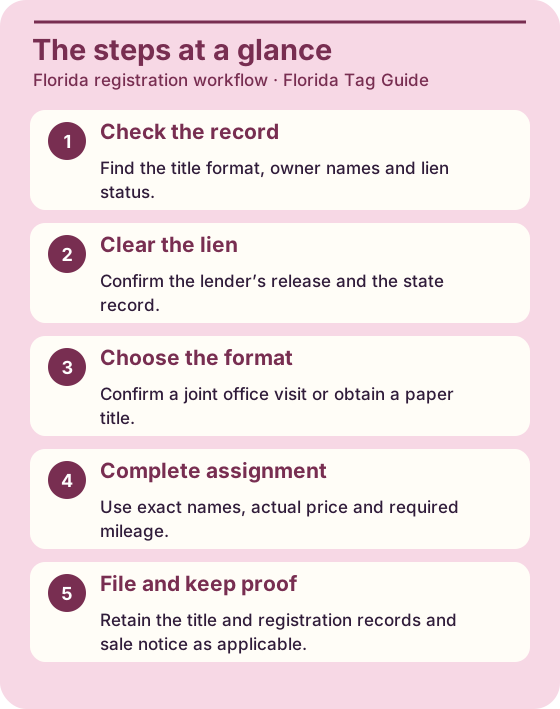
Read the steps as text
- Check the record Find the title format, owner names and lien status.
- Clear the lien Confirm the lender’s release and the state record.
- Choose the format Confirm a joint office visit or obtain a paper title.
- Complete assignment Use exact names, actual price and required mileage.
- File and keep proof Retain the title and registration records and sale notice as applicable.
Request a printed title if you need one
If the record is electronic and eligible for printing, the lawful owner can use MyDMV Portal to request a title by mail. Confirm that the state’s mailing address is current before paying. Set your buyer’s expectations around delivery rather than promising a handover on the day the print request is lodged. Time spent in the mail can exceed processing time, especially around public holidays. When the packet arrives, review the document and keep it unmarked until you are ready to complete the sale.
For an urgent sale, ask a tax collector or license plate office whether it offers fast-title printing, whether you need an appointment and which identification or owner authorization it accepts. An expedited title usually carries an extra fee. County service pages may show different options for branch appointments, mail and online processing. Verify the amount and service availability directly rather than budgeting from another county’s fee table. Include an extra day before a planned sale if you need to confirm the names on the document or gather signatures.
If the record shows a paper title that you cannot locate, ask about a duplicate rather than requesting conversion from an electronic title. If a replacement is issued, check which document is now valid and how to dispose of the earlier copy if it turns up.
For a co-owned car, give the office the exact way the owners are listed and ask who must submit the print request and sign the later assignment. For example, an owner who is available to pick up a printed title may still need another person’s signature to transfer it. When one owner has died or a court order has changed ownership, ask for the corresponding title procedure before making a print request. Those cases may call for ownership evidence beyond the record a buyer can view online. Resolve signatures and authority while the car is still listed in the owners’ names.
Handle a payoff or lien release before closing
A Florida vehicle title can be electronic with or without a lien. A payoff statement tells you what the lender expects to receive. A payoff receipt shows that funds changed hands. The electronic lien satisfaction can take additional time to appear on the state record. Ask the lender what event starts its release process and how it can confirm what was sent. Check the record after the lender says the lien is satisfied. Consult the county if the release is on paper, the loan was transferred, or an active lien is part of an approved transfer of equity.
A buyer and seller need a joint plan if proceeds from the sale will be used to repay the existing loan. Ask the lender how it can participate and agree on how the required funds will be directed and documented. Determine what happens if the release will arrive after the planned purchase date. If the car remains on private property while you wait, agree on who keeps the keys and when possession will change. Buyers who are separately financing the purchase should have their lender identify the exact documents it needs from the seller’s lender and the state.

Complete a private sale with a paper title
For the paper route, check the original document against the car, the seller’s identification and the proposed purchaser details. Read instructions in the transfer section before anyone writes on the title. Use the actual sale amount and complete the acquisition date and required mileage disclosure. Ask which co-owners must sign if more than one person appears. Florida’s requirements for a Florida title can differ from another state’s rules for that state’s document. Have the issuing authority resolve any uncertainty before relying on a handwritten change.
Use a signed sale record for your own files and check FLHSMV and county instructions for the seller’s Notice of Sale. An assignment and a notice accomplish different things. Complete each through the correct process and retain evidence of submission. The seller should handle their plate separately. The buyer needs to follow the title deadline in Florida law and set up valid registration before driving. If the transaction leads to a Florida title application, the Florida Tag Guide calculator helps separate state and county tax estimates from title and registration charges.
| Record | Who uses it | Purpose |
|---|---|---|
| Assigned Florida title | Buyer and office | Supports transfer of ownership |
| Notice of Sale | Seller and FLHSMV | Records that the vehicle was sold |
| Receipt or bill of sale | Both parties | Documents terms and timing of payment |
Choose between two common sale schedules
Case one is a lien-free sale between local residents who can attend together. They confirm an available office visit, have the vehicle details ready and ask that the Florida title remain electronic. The buyer arranges insurance and checks whether any existing Florida plate can be transferred. At the appointment both complete the secure reassignment and check that the names, VIN and mileage are correct. They keep the relevant record of the transaction and then follow the agreed handoff plan.
Case two involves an owner selling to someone who cannot return to Florida for an appointment. The owner asks the buyer’s titling state what evidence it will accept, checks the Florida title and requests paper in time. If the owner just paid off a Florida lien, they confirm that the state record reflects the satisfaction before counting on the print request. Before meeting, they check that the document does not need any corrections and confirm legal transport. A buyer driving to another state after a private Florida sale should review the separate temporary-tag decision before arriving.
In either case, record who will receive any registration document, extra key or remaining application paperwork. Set a reasonable follow-up date so a missing document is spotted while both parties can still contact each other.
Recover if the office pauses your transfer
Ask the clerk to describe the exact block and the acceptable remedy. If there is a lien, ask whether the office needs an update in the state record or the original release document. If an owner name has changed, ask what evidence connects that owner to the title. If the title was originally issued as paper and is missing, ask who may request a duplicate and how delivery works. Tell the other party which action belongs to them and set a realistic date for checking again.
If an assignment field has been crossed out or completed incorrectly, stop before altering more entries. FLHSMV has procedures for mistakes that can require an affidavit or an unaltered replacement title. The issuing office can explain which one applies. When the car was titled elsewhere, see the interstate purchase guide for how Florida evaluates that document. In a serious ownership dispute, use the appropriate government or legal channel rather than accepting a new informal note as a substitute for title.
- Ask for the exact document or change that will remove the block.
- Separate the office response from any private payment deadline.
- Hold the vehicle in an agreed location until it can lawfully be handed over.

Save the right records after the sale
A seller should retain a copy of the filed sale notice or other confirmation, the sale record and details of how the old plate was handled. Record the date the vehicle was handed over. Match those records to any follow-up from the county, the insurer or a toll account. If insurance is being removed, coordinate the timing with the plate and registration status. Remove the vehicle from toll, parking and connected-car accounts when appropriate. Keep transaction paperwork in a secure place because it contains personal information.
A buyer should retain the title and registration receipts and compare the vehicle information against the documents provided. Check how a physical title will be sent if one was requested. In a financed sale, check who is listed as the lienholder and how to ask questions about the record. Make sure your insurer has the correct VIN and verify when the temporary authorization, if any, expires. If the title is electronic by agreement, record how to request a paper title when the time comes rather than saving a screenshot as proof of the next transfer.
Frequently asked questions
Can I transfer a Florida electronic title entirely online in a private sale?
The casual electronic reassignment in FLHSMV procedure TL-11 is handled in person with buyer and seller present. Ask the office what it requires or use an eligible official paper title route.
Is an electronic title the same as an electronic lien?
A title identifies ownership and can be maintained electronically. A lien records the lender’s interest, which can be active or satisfied while the title remains electronic.
Can the buyer print the seller’s electronic title?
The owner or an authorized party must use the official print process. A buyer should arrange to obtain a properly assigned paper title or complete an eligible reassignment with the seller.
Can I get a printed title on the day I ask?
A branch offering fast-title service can print eligible titles for an additional fee. Confirm the office, your eligibility, the documents and the cost before relying on it.
When should I apply for the new title?
Florida Statutes 319.23 sets a 30-day filing period from delivery for ordinary motor vehicle transfers. Coordinate the title route before the handoff so you can meet that deadline.
Official sources
- FLHSMV TL-11 procedure for Florida title transfers and electronic reassignment
- FLHSMV TL-69 procedure for electronic liens, releases and print requests
- Florida Statutes 319.225 on title reassignment and odometer disclosures
- Florida Statutes 319.23 on the time allowed to apply after delivery
- Orange County Tax Collector private-sale title instructions
- Manatee County Tax Collector options for printing an electronic title
- FLHSMV Motor Vehicle Check
- FLHSMV MyDMV Portal for eligible title services